Nerve Ease Ingredients: All 14 in Each 2-Capsule Serving
Quick answer
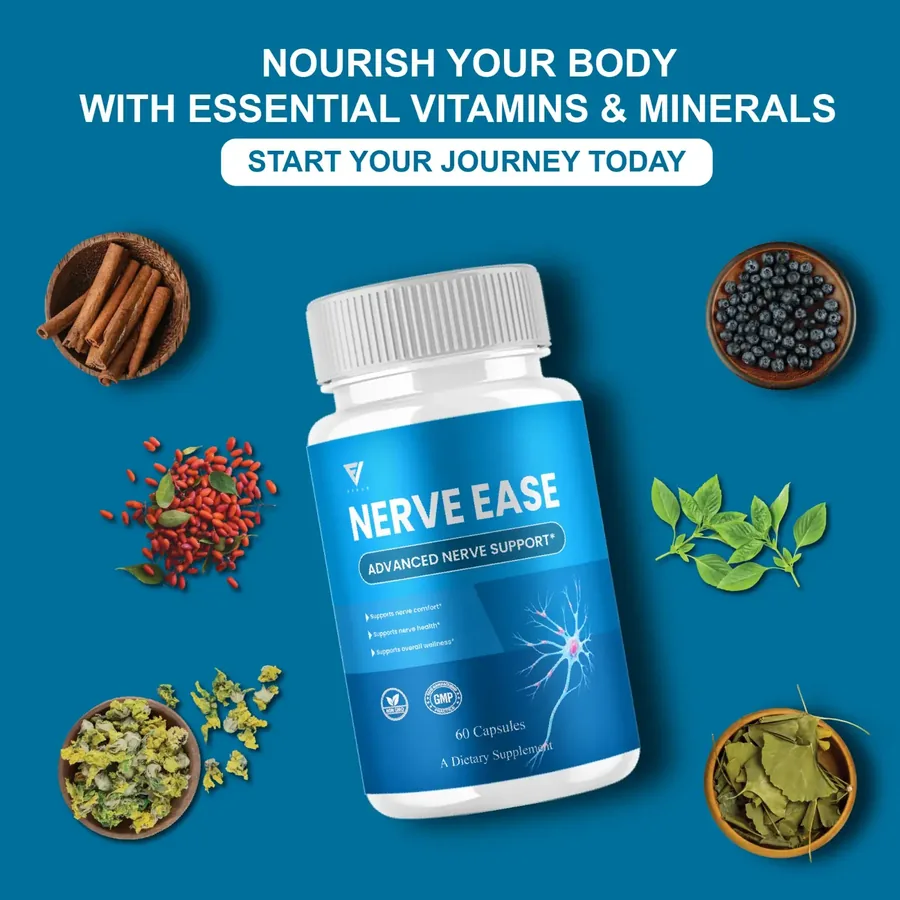
Nerve Ease lists 14 ingredients in each 2-capsule serving.
Folate, B12 (240 mcg), magnesium (250 mg) and chromium (120 mcg) have printed amounts; ten more, including alpha lipoic acid, share a 635 mg blend. Alpha lipoic acid, B12 and magnesium are the three with nerve research.
Which Nerve Ease ingredients have any nerve research at all?
Three of the fourteen do, and none of the three is a clean win. Alpha lipoic acid has mixed trial results in diabetic nerve symptoms, B12 matters for nerves when a person is low, and magnesium has three tiny nerve-pain trials that reviewers called equivocal. The other eleven have no nerve trials in any source we opened.
| Label line | Per 2 capsules | Nerve research we found |
|---|---|---|
| Alpha lipoic acid (printed "Alpa") | not printed | Mixed. 600 mg a day helped symptoms in a 5-week trial; a 4-year trial missed its main goal |
| Vitamin B12 (cyanocobalamin) | 240 mcg | Only if low. A shortage causes numbness and tingling; extra B12 does not help normal levels |
| Folate (as folic acid) | 600 mcg DFE | None for nerves; can hide a B12 shortage |
| Magnesium (oxide) | 250 mg | Equivocal. 3 small trials, 62 people |
| Chromium (picolinate) | 120 mcg | None; studied for blood sugar |
| Cinnamon bark extract | not printed | None in people |
| Ginkgo biloba leaf extract | not printed | None; memory trials only |
| Bilberry fruit extract | not printed | None |
| Bacopa monnieri (NLT 20% bacosides) | not printed | None; memory trials only |
| Green tea leaf extract (NLT 50% EGCG) | not printed | None |
| Berberine HCl | not printed | None; studied for blood sugar |
| L-theanine | not printed | None; short attention tests only |
| GPC choline (alpha-GPC) | not printed | None; tested in dementia |
| Lutein and zeaxanthin (marigold) | not printed | None; brain-scan studies |
The first four rows are the only ones with printed amounts. Everything from cinnamon down sits inside the 635 mg WMG-NVT Exclusive Blend, which lists names but no single weights (J Nutr, Perspectives on proprietary blends).
How far are the label amounts from the doses tested?
Each bar sets a label amount against the dose used in human research. A blank bar means the label gives no number to draw.
Label: not published (one of ten in 635 mg). Studied: 600 mg a day by mouth in nerve trials. (Ziegler et al., SYDNEY 2 trial (Diabetes Care 2006)) (Ziegler et al., NATHAN 1 trial (Diabetes Care 2011)) (Cochrane review, ALA for diabetic peripheral neuropathy (2024))
Label: 240 mcg. Studied: 1,000 to 2,000 mcg a day by mouth to treat a deficiency. (NIH ODS, Vitamin B12 (consumer)) (NIH ODS, Vitamin B12 (health professional))
Label: 320 mcg (600 mcg DFE). Studied: about 400 to 2,500 mcg folic acid a day in trials. (NIH ODS, Folate (health professional))
Label: 250 mg (oxide). Studied: few small nerve-pain trials; supplement upper limit 350 mg a day. (Park et al., Magnesium for chronic pain (Anesth Analg 2020)) (NIH ODS, Magnesium (health professional))
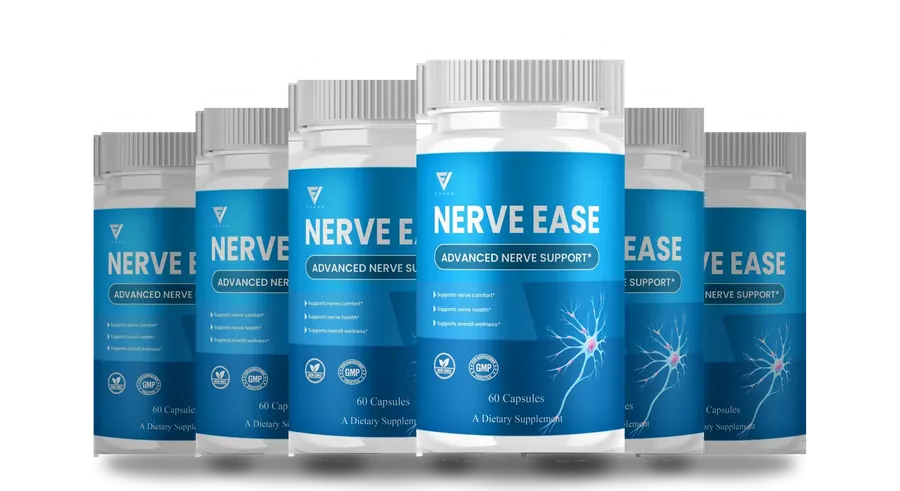
Thinking about Nerve Ease? The best price is on the 15-bottle pack.
15 bottles for $152.88, $10.19 a bottle. eBay buyer protection · Free US shipping · Secure checkout.
Where do the eight full ingredient guides begin?
Pick a node for the short version; each panel links to a full guide.
Antioxidant, 8th in the blend
Alpha lipoic acid
The one blend ingredient with diabetic nerve trials. Results split: a short trial helped symptoms, a long one missed its goal, and a 2024 review saw little change at six months.
Studied at: 600 mg a day by mouth.
Read the Alpha lipoic acid pageB vitamins, printed amounts
Vitamin B12 and folate
Low B12 can cause numbness and tingling, and metformin can lower it. A blood test, not a capsule, settles whether you are low.
Studied at: 1,000 to 2,000 mcg B12 a day by mouth to treat a shortage.
Read the Vitamin B12 and folate pageMineral, 250 mg as oxide
Magnesium
Three small nerve-pain trials with 62 people, some given magnesium by vein. Oxide is poorly absorbed and loosens stools.
Studied at: No settled nerve dose; supplement limit 350 mg a day.
Read the Magnesium pageLeaf extract, 2nd in the blend
Ginkgo biloba
Sold for memory and circulation. No nerve-pain trials turned up, and it may raise bleeding risk.
Studied at: 120 mg twice a day in memory trials.
Read the Ginkgo biloba pageAyurvedic herb
Bacopa monnieri
Its trials measured memory and attention, never nerve symptoms. Stomach upset is the usual complaint.
Studied at: 300 to 450 mg a day for 12 weeks.
Read the Bacopa monnieri pageTea catechins, NLT 50% EGCG
Green tea extract
No nerve trials. Concentrated extracts are a known, uncommon cause of liver injury.
Studied at: 9 to 300 mg EGCG in thinking trials.
Read the Green tea extract pagePlant compound
Berberine
Researched for blood sugar, not nerves. It changes how several medicines are broken down.
Studied at: 250 to 500 mg two or three times a day.
Read the Berberine pageTea amino acid
L-theanine
Tested on reaction time in healthy volunteers. Nobody has measured it against nerve pain.
Studied at: 50 to 400 mg, often 200 mg.
Read the L-theanine pageChromium: does 120 mcg do anything for nerves?
No nerve study of chromium came up in our search. This trace mineral is researched for blood sugar, and NCCIH calls that evidence weak and inconclusive (NCCIH, Diabetes and Dietary Supplements). The label gives 120 mcg as picolinate, printed as 343% of the Daily Value.
NIH says healthy people do not run short of chromium and no upper limit has been set (NIH ODS, Chromium (health professional)). The same page warns that chromium taken with insulin or diabetes pills could push blood sugar too low. That matters here, because many people shopping for nerve products have diabetes.
Cinnamon bark extract: is there any nerve evidence?
None in people. Cinnamon heads the blend list, printed as "Cinnamomum spp." with no species, and human research on it is about blood sugar with unclear results (NCCIH, Cinnamon: Usefulness and Safety).
Species matters for safety. Cassia cinnamon contains coumarin, which has been linked to liver effects, and Ceylon cinnamon in larger amounts is considered unsafe in pregnancy.
As the first blend item, cinnamon could be the largest share of the 635 mg, if the heaviest-first rule holds. With diabetes medicine, mention it to your prescriber along with chromium and berberine.
Bilberry fruit extract: what is it doing in a nerve formula?
The label does not say, and no research we found links bilberry to nerves. NCCIH says bilberry has not been clearly shown to help any health condition, and the best studies found no night-vision benefit (NCCIH, Bilberry: Usefulness and Safety).
The panel prints the source as "Vaccinium cyanococcus fruit". Safety studies used fruit extracts up to 160 mg a day for up to six months. Listed third, bilberry can be at most about 211 mg if the heaviest-first rule is followed.
Alpha-GPC: does a choline compound help nerves?
There is no nerve research on it in our sources. Alpha-GPC, printed as "GPC Choline", was studied in people who already had dementia at 400 mg three times a day (Alzheimer's Drug Discovery Foundation, Alpha-GPC).
Ninth in the blend, it can weigh no more than about 70 mg if the order rule holds. For scale, adults are advised to get 425 to 550 mg of choline a day from all sources, with an upper limit of 3,500 mg (NIH ODS, Choline (health professional)).
Lutein and zeaxanthin: why are eye pigments on a nerve label?
They are yellow plant pigments, here taken from marigold flowers, and their research is about the eye and brain scans, not hands and feet. Small trials gave 10 mg lutein plus 2 mg zeaxanthin a day for 12 months and reported scan changes in older adults (Nutrients 2021, Yagi et al., Lutein and brain health).
Up to 20 mg of lutein a day has not been tied to safety concerns (Alzheimer's Drug Discovery Foundation, Lutein and Zeaxanthin). As the last of ten, the pair can be at most 63.5 mg under the order rule, so the studied 12 mg could fit. The label does not say whether it does.
Questions about Nerve Ease ingredients
What are the ingredients in Nerve Ease?
Folate, vitamin B12, magnesium and chromium with printed amounts, plus ten more in a 635 mg blend, including alpha lipoic acid, ginkgo and berberine.
Does Nerve Ease contain 600 mg of alpha lipoic acid?
No. The whole blend is 635 mg shared by ten ingredients. If listed heaviest first, ALA can be at most about 79 mg.
Which ingredient in Nerve Ease is best for nerve pain in feet?
None is proven for it. Alpha lipoic acid is the most studied, with mixed results at 600 mg a day. Burning or numb feet need a doctor to find the cause.
Is 120 mcg of chromium safe?
For most adults it is unlikely to cause trouble, and no upper limit is set. With insulin, diabetes pills, or kidney or liver disease, ask your doctor first.
Does cinnamon help neuropathy?
No human study shows that. Cinnamon research is about blood sugar, and NCCIH says the results are unclear.
What is bilberry good for?
Nothing proven. NCCIH says it has not been clearly shown to help any health condition.
Does alpha-GPC help nerves?
No nerve studies were found. It was tested in people with dementia at 1,200 mg a day.
What are lutein and zeaxanthin for?
They are pigments studied for eye and brain health. Trials used 10 mg plus 2 mg a day; the amount in this capsule is not printed.
Page check
Written by
Checks each line against the bottle images, the eBay listing and nerve-health sources from NIH, CDC and FDA before it is published.
Medically reviewed by
Dr. Stephen Barrett, DPM, Podiatrist
Medical reviewer. Review date: October 12, 2026.
- Last checked October 12, 2026
- Facts from the bottle, the sales page and the sources cited above
- Found an error? Write to [email protected] or read how we check facts