Alpha Lipoic Acid in Nerve Ease: The 600 mg Trials and the 635 mg Blend
Quick answer
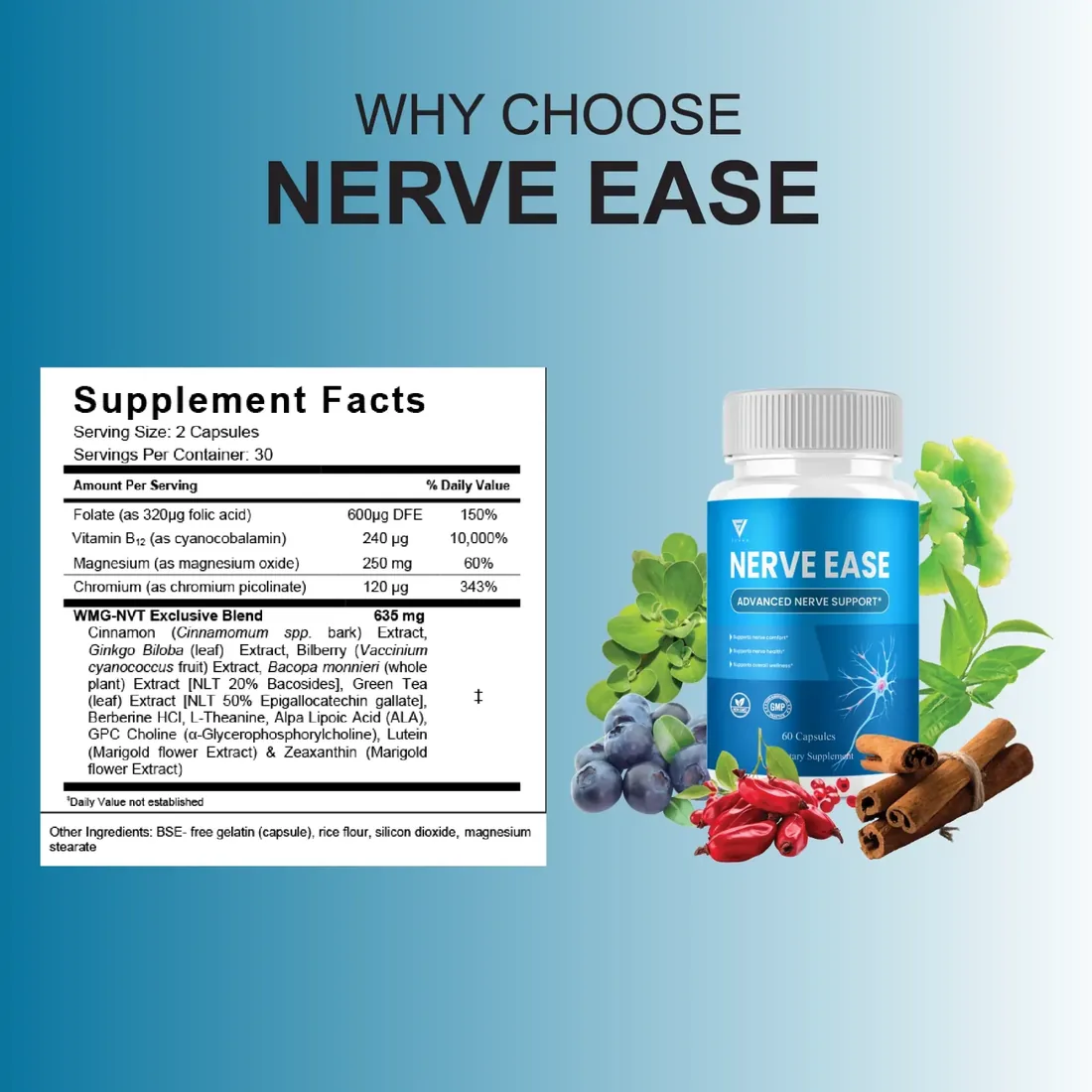
Alpha lipoic acid is the 8th of 10 ingredients in the Nerve Ease 635 mg blend, and its amount is not printed. Nerve trials used 600 mg a day: a 5-week trial saw symptom gains, a 4-year trial missed its main goal, and a 2024 Cochrane review found little or no effect at six months. If the blend is listed heaviest first, it is at most about 79 mg.
What is alpha lipoic acid, and why do nerve formulas include it?
Alpha lipoic acid, or ALA, is an antioxidant compound sold as a supplement. It has the longest nerve research record of any ingredient here, nearly all of it in diabetic polyneuropathy: burning, tingling or numb feet from diabetes.
It is not a medicine. The FDA has not approved ALA for any condition (LiverTox, Alpha Lipoic Acid). Mayo Clinic files it under alternative medicine with "some evidence" for painful diabetic neuropathy (Mayo Clinic, Peripheral neuropathy: diagnosis and treatment).
- Printed on the panel as
- "Alpa Lipoic Acid (ALA)", a misspelling
- Place in the blend list
- 8th of 10 names
- Amount per 2 capsules
- Not published
- Dose used in nerve trials
- 600 mg once a day by mouth
What did the 600 mg alpha lipoic acid trials find?
Short trials looked hopeful; the longest trial and the newest review did not confirm them.
- 2006
SYDNEY 2: 5 weeks, 181 people
600, 1,200 or 1,800 mg a day vs placebo. Symptom scores fell about 48 to 52% on ALA and 32% on placebo. (Ziegler et al., SYDNEY 2 trial (Diabetes Care 2006))
- 2011
NATHAN 1: 4 years, 460 people
600 mg a day vs placebo. The main goal was missed; a few secondary nerve scores favored ALA. (Ziegler et al., NATHAN 1 trial (Diabetes Care 2011))
- 2024
Frediani review: 40 studies
Said the data support ALA in diabetic neuropathy, found it not effective for chemotherapy nerve damage, and asked for more research. (Frediani et al., Diet and supplements for chronic neuropathic pain (Pain Practice 2024))
- 2024
Cochrane: 3 trials, 816 adults
At six months ALA probably has little or no effect on symptoms. All three trials had high dropout bias. (Cochrane review, ALA for diabetic peripheral neuropathy (2024))
Why do experts read these trials differently?
Route is part of it. ALA given by IV drip for 2 to 4 weeks cut symptoms in pooled analyses, while the 4-year oral trial found no difference on its main goal. Many ALA studies also came from one German group funded by an ALA maker (Linus Pauling Institute, Lipoic Acid).
American Family Physician says ALA needs further study and makes no recommendation (American Family Physician, Diabetic Peripheral Neuropathy (2024)). A fair summary: a possible modest effect at 600 mg a day in some trials, not confirmed.
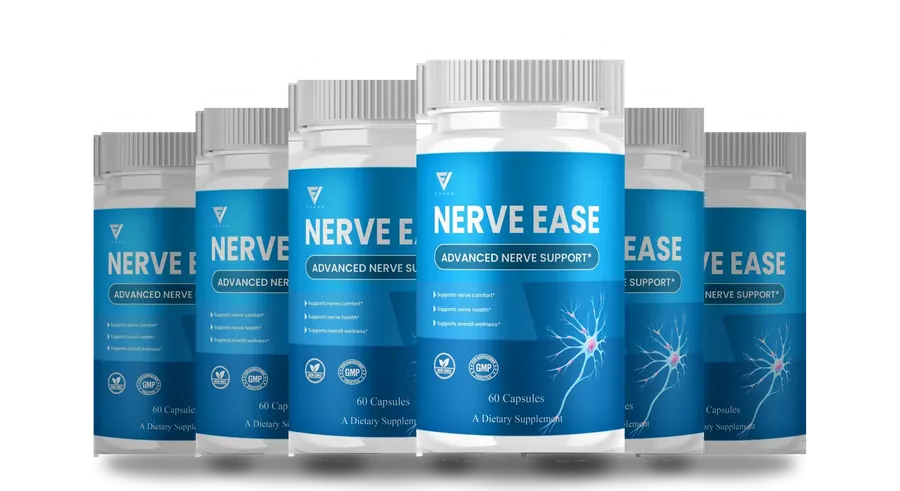
Thinking about Nerve Ease? The best price is on the 15-bottle pack.
15 bottles for $152.88, $10.19 a bottle. eBay buyer protection · Free US shipping · Secure checkout.
How much alpha lipoic acid could the Nerve Ease blend hold?
Only the maker knows, because the panel prints a single weight for ten ingredients. The label still lets us set a ceiling. Tap each numbered dot first.
- 635 mg for ten ingredients. One weight for the whole blend. ALA gets no number of its own.
- Cinnamon comes first. If the list runs heaviest first, cinnamon is the largest share.
- ALA is name number 8. Seven ingredients sit ahead of it.
- Two names follow. GPC choline, then lutein and zeaxanthin from marigold.
FDA labeling guidance says blend ingredients are listed by weight, heaviest first (FDA, Dietary Supplement Labeling Guide, Ch. IV). If the panel obeys that rule, each of the seven names above ALA weighs at least as much as ALA. Eight such shares must fit in 635 mg, and 635 divided by 8 is about 79.4 mg.
| How you read the label | ALA per 2 capsules | Next to 600 mg |
|---|---|---|
| Heaviest-first rule, best case | about 79 mg | About one eighth |
| All ten ingredients equal | 63.5 mg | About one tenth |
| Heaviest-first rule, low end | No floor | Unknown |
| ALA at the trial dose | 600 mg | Impossible: the seven names above would need at least 4,200 mg more |
Blend labels in general cannot show how much of one ingredient you take (J Nutr, Perspectives on proprietary blends).
Which Nerve Ease amounts can be checked against research?
Only the printed ones. Two bars stay empty: ALA has no amount on the label, and magnesium, though printed at 250 mg, has no tested nerve-pain dose to measure against.
Label: not published (one of ten in 635 mg). Studied: 600 mg a day by mouth in nerve trials. (Ziegler et al., SYDNEY 2 trial (Diabetes Care 2006)) (Ziegler et al., NATHAN 1 trial (Diabetes Care 2011)) (Cochrane review, ALA for diabetic peripheral neuropathy (2024))
Label: 240 mcg. Studied: 1,000 to 2,000 mcg a day by mouth to treat a deficiency. (NIH ODS, Vitamin B12 (consumer)) (NIH ODS, Vitamin B12 (health professional))
Label: 320 mcg (600 mcg DFE). Studied: about 400 to 2,500 mcg folic acid a day in trials. (NIH ODS, Folate (health professional))
Label: 250 mg (oxide). Studied: few small nerve-pain trials; supplement upper limit 350 mg a day. (Park et al., Magnesium for chronic pain (Anesth Analg 2020)) (NIH ODS, Magnesium (health professional))
Does alpha lipoic acid push blood sugar down?
Yes, in some people, mainly at high doses or on top of diabetes medicine. High doses can cause low blood sugar symptoms and may add to blood sugar drugs (Memorial Sloan Kettering, Alpha-Lipoic Acid (About Herbs)), so anyone using insulin or diabetes tablets should have their glucose watched closely (Linus Pauling Institute, Lipoic Acid).
That is not the same as treating diabetes: a 2019 review found ALA no better than placebo for lowering blood sugar (NCCIH, Diabetes and Dietary Supplements). In Nerve Ease, chromium, cinnamon and berberine add to the same blood sugar question.
What side effects has alpha lipoic acid caused?
Mostly stomach complaints and rash, with rarer problems on record.
| Reported effect | What the source says |
|---|---|
| Nausea, vomiting, vertigo | Rose with dose in SYDNEY 2 (Ziegler et al., SYDNEY 2 trial (Diabetes Care 2006)) |
| Upset stomach, skin rash | Listed by Mayo Clinic (Mayo Clinic, Peripheral neuropathy: diagnosis and treatment) |
| Serious adverse events | 38.1% on ALA vs 28.0% on placebo over 4 years (Ziegler et al., NATHAN 1 trial (Diabetes Care 2011)) |
| Rare serious reactions | Case reports of poisoning and insulin autoimmune syndrome (Memorial Sloan Kettering, Alpha-Lipoic Acid (About Herbs)) |
| Liver injury | Score E: unlikely at usual doses (LiverTox, Alpha Lipoic Acid) |
Because it acts as an antioxidant, ALA might blunt chemotherapy and radiation. In pregnancy, use should only be considered under strict medical supervision (Linus Pauling Institute, Lipoic Acid), and the Nerve Ease label says not to use it while pregnant or nursing.
Who should check with a doctor before taking ALA in this capsule?
Answer five questions.
ALA safety check
Are you pregnant or nursing?
Do you inject insulin or take a diabetes tablet?
Are you having chemotherapy or radiation, now or soon?
Is your numbness spreading, or is a foot sore slow to heal?
Do you already take a separate ALA product?
Answer every question to see your result. Nothing is saved or sent.
Nothing flagged. Stay at the labeled 2 capsules, and remember the ALA in Nerve Ease is a small, unknown amount.
Check with your doctor or pharmacist before the first dose, bottle in hand. Spreading numbness or a slow-healing sore needs a checkup either way.
Skip Nerve Ease. The back label says not to use it if you are pregnant or nursing.
What does alpha lipoic acid add to Nerve Ease?
A familiar name more than a trial dose: one of ten in a shared blend, at most about 79 mg by the label's own order. Our ALA 600 mg vs Nerve Ease article compares the two. Even prescription drugs for painful diabetic neuropathy reduce pain without restoring feeling.
The B vitamins are on the B12 and folate page, every label line is on the Supplement Facts page, and all reactions are on the side effects page.
Alpha lipoic acid for neuropathy: dose, results and safety
What is the alpha lipoic acid dosage for neuropathy?
Trials in diabetic nerve symptoms used 600 mg once a day by mouth. Nerve Ease does not print its ALA amount; by our label arithmetic it is at most about 79 mg.
Does alpha lipoic acid work for neuropathy?
The results are mixed. A 5-week trial found symptom gains, a 4-year trial missed its main goal, and a 2024 Cochrane review found little or no effect on symptoms at six months.
Is 600 mg of alpha lipoic acid safe?
Most trial patients took it without trouble, but nausea and vertigo rose with dose, and the 4-year trial logged more serious adverse events on ALA. People on insulin or glucose-lowering pills should ask their prescriber first.
Which alpha lipoic acid side effects show up most often?
Upset stomach, nausea and skin rash. Rare serious reactions appear in case reports, and LiverTox rates liver injury as unlikely.
How long does alpha lipoic acid take to work for neuropathy?
No reliable timeline exists. SYDNEY 2 measured change at 5 weeks, but at six months the Cochrane review found little or no difference.
Does Nerve Ease contain 600 mg of alpha lipoic acid?
No. ALA shares a 635 mg blend with nine other ingredients, so 600 mg cannot fit.
Is alpha lipoic acid safe with metformin or insulin?
Ask your prescriber before combining them. ALA may add to the effect of blood sugar drugs, so glucose should be watched closely.
Does alpha lipoic acid help nerve damage from chemotherapy?
A 2024 review found it was not effective for chemotherapy nerve damage, and as an antioxidant it might blunt the cancer treatment itself. Ask your cancer team first.
Page check
Written by
Checks each line against the bottle images, the eBay listing and nerve-health sources from NIH, CDC and FDA before it is published.
Medically reviewed by
Dr. Stephen Barrett, DPM, Podiatrist
Medical reviewer. Review date: October 12, 2026.
- Last checked October 12, 2026
- Facts from the bottle, the sales page and the sources cited above
- Found an error? Write to [email protected] or read how we check facts